An Autistic Guide to Christmas
We are rapidly approaching Christmas, a time of year which fills some with joy and others with dread. I imagine, for most of us, it can depend on the sort of year we have had and how we are feeling generally. There have been Christmases where I’ve been so excited and happy. There have also been Christmases when I’ve felt too low to join in with family games, or so overwhelmed that I’ve hidden in my room under my weighted blanket. Regardless, for most of us, each Christmas is filled with an array of different emotions.
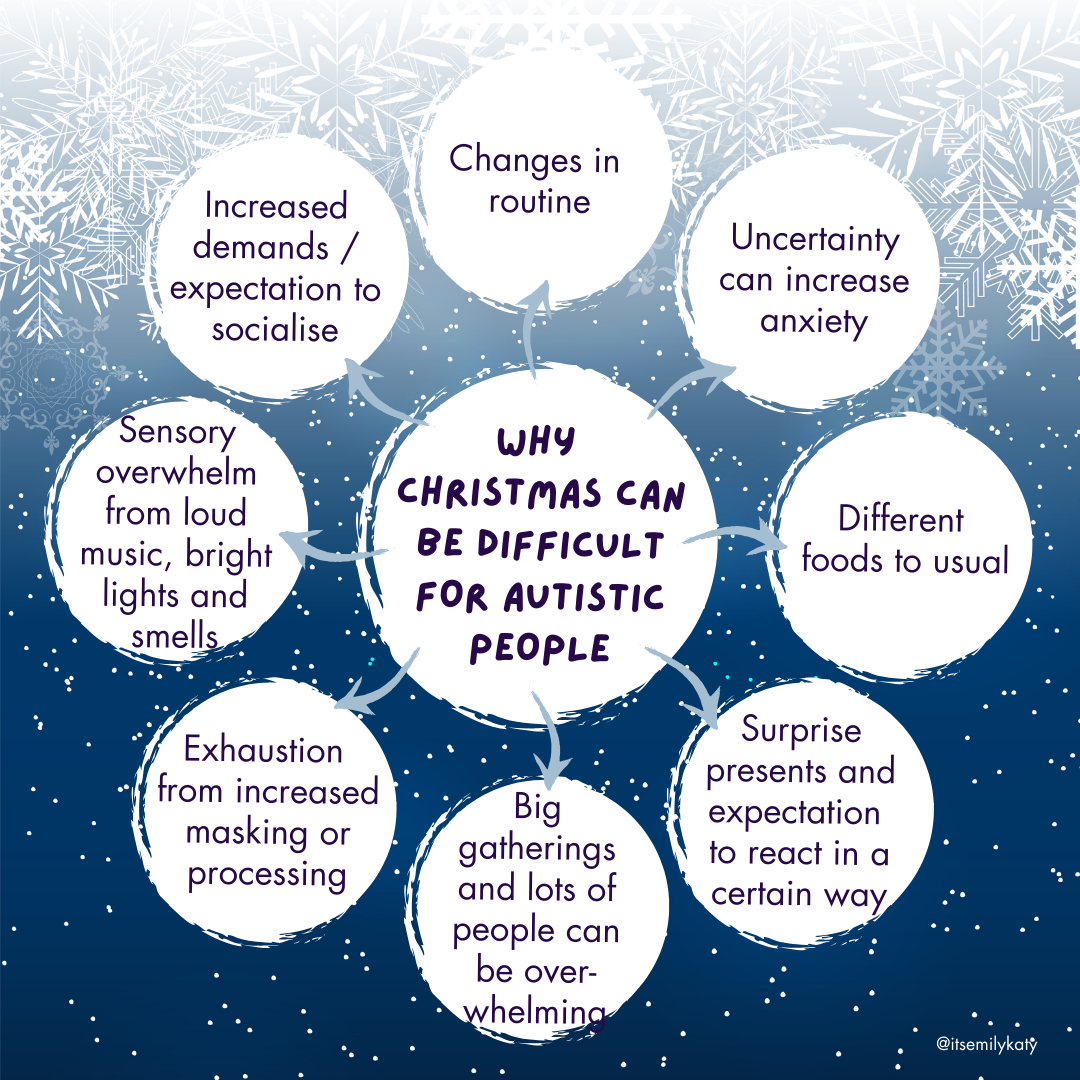
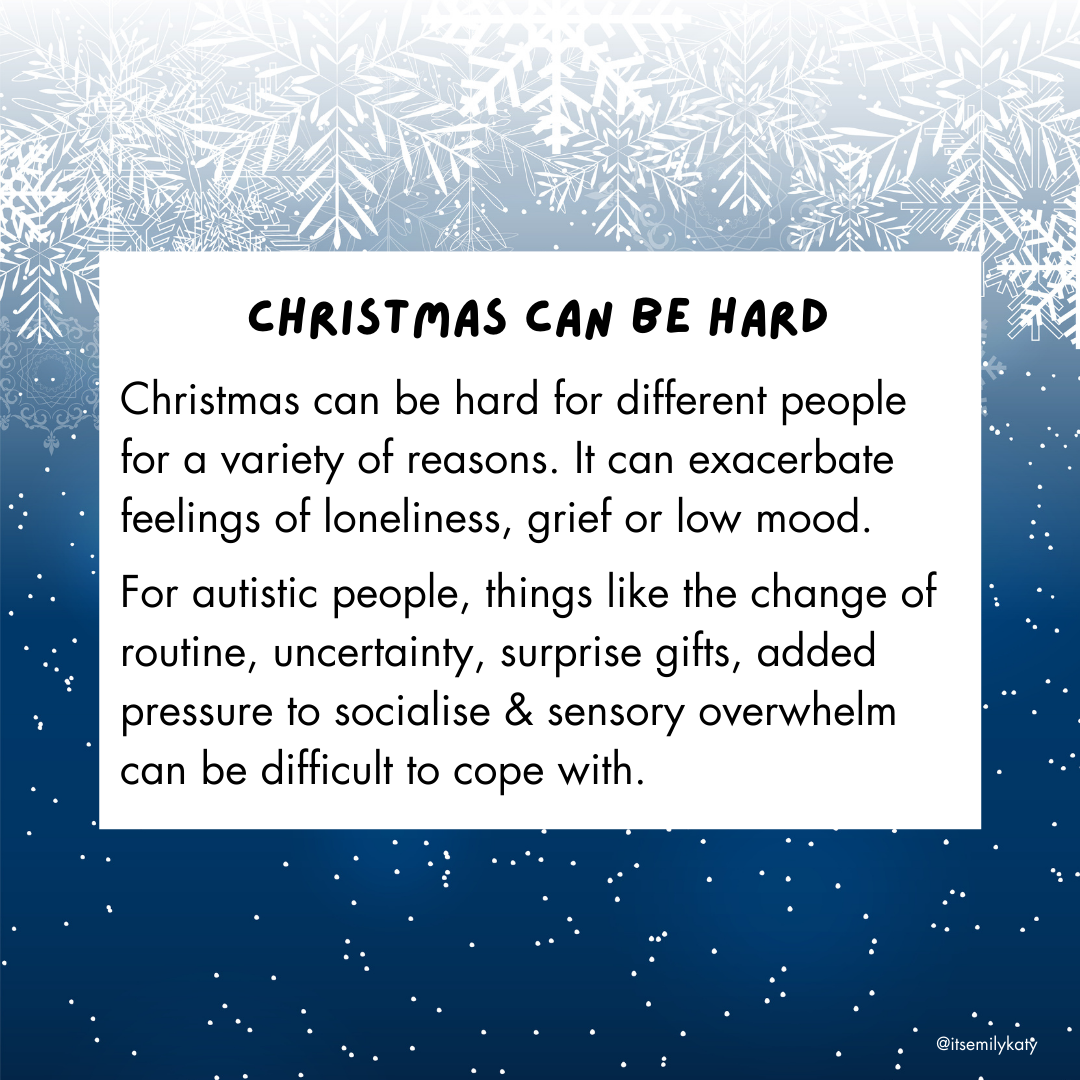
Christmas can be hard for different people for different reasons. It can exacerbate feelings of loneliness, grief or low mood. Everything at Christmas time seems to feel more intense - whether that’s good stuff or hard stuff. For autistic people, this time of year can bring specific challenges that can feel hard to navigate.
What Can be Challenging for Autistic People at Christmas?
Changes in Routine
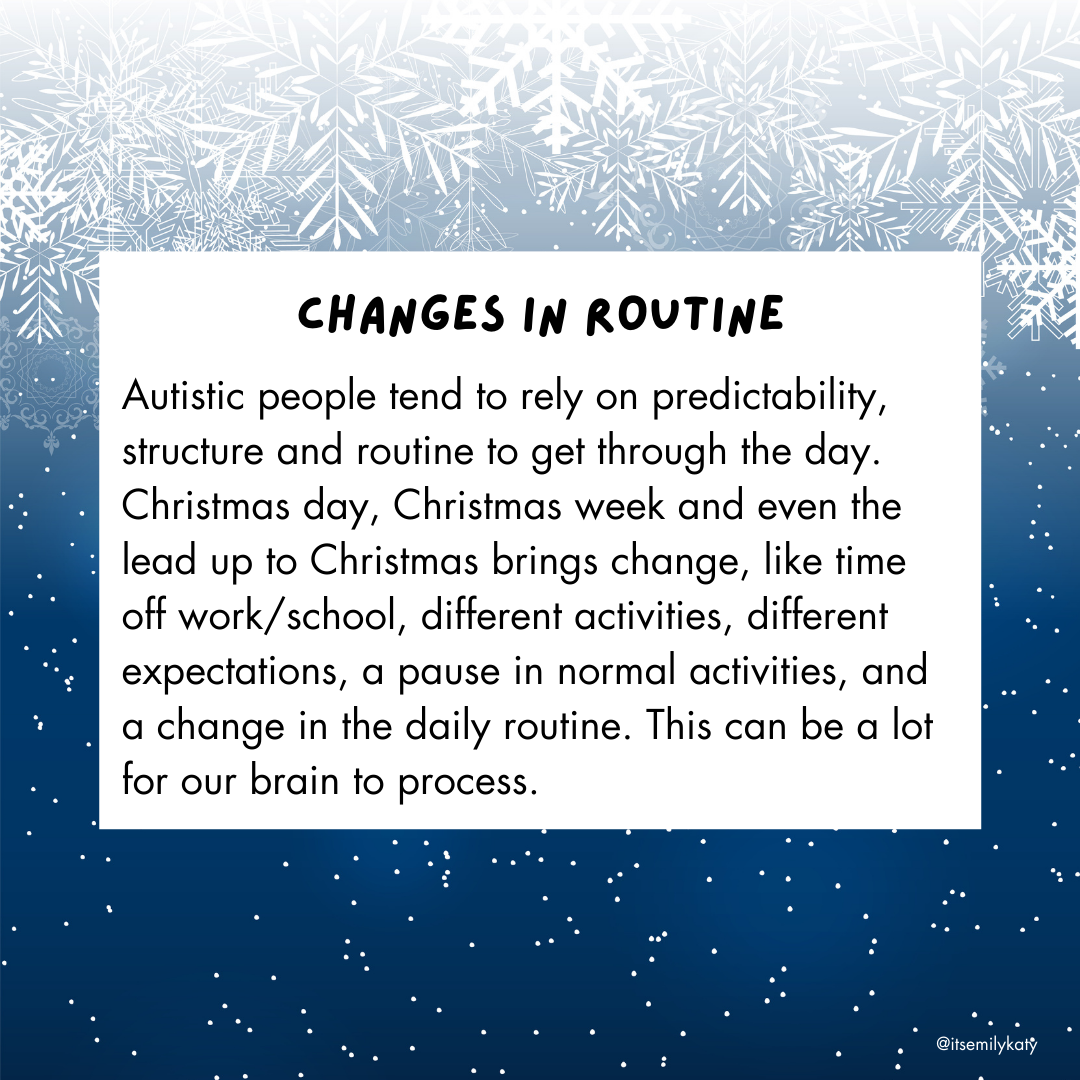
Autistic people tend to rely heavily on predictability, structure and routine. Christmas day, Christmas week and even the lead up to Christmas brings a whole lot of change, like time off work or school, new activities, different expectations, the ceasing of normal activities, and change to our daily routine. It’s a lot for our brain to process.
As a child, I struggled with the class routine changing - I didn’t want to watch a film in class or sing in the carol concert or create decorations because this wasn’t the normal routine. Being given advanced notice and information about what to expect would have helped. At least now I’m an adult, I have more control over my day and can advocate for my needs better than when I was younger.
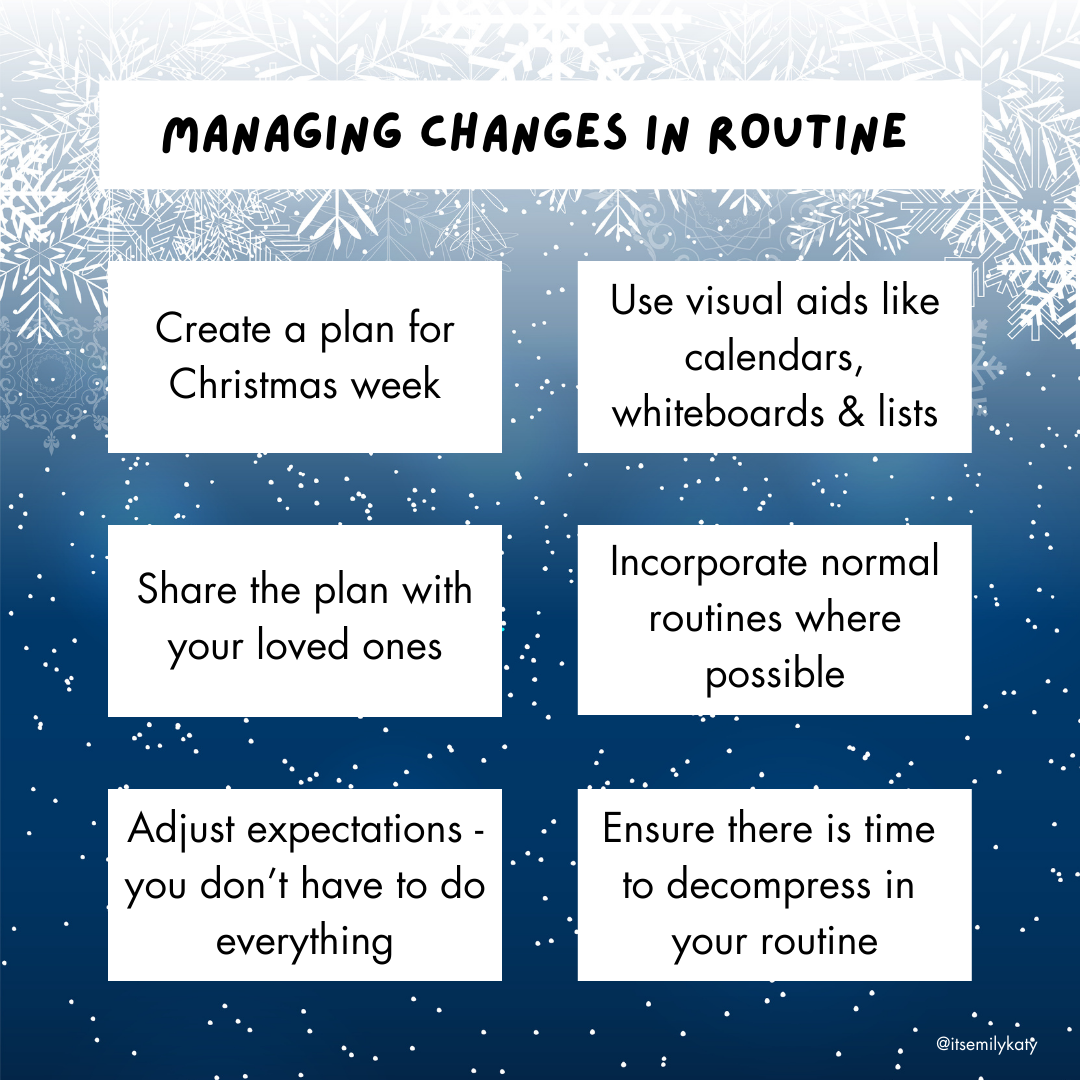
Things that might help:
Create a plan/schedule/timetable for Christmas week
Use visual aids like calendars, whiteboards & lists
Share the plan with your loved ones (or create it in conjunction with them!)
Incorporate normal routines where possible
Ensure there is time to decompress in your routine
Adjust expectations - you don’t have to do everything
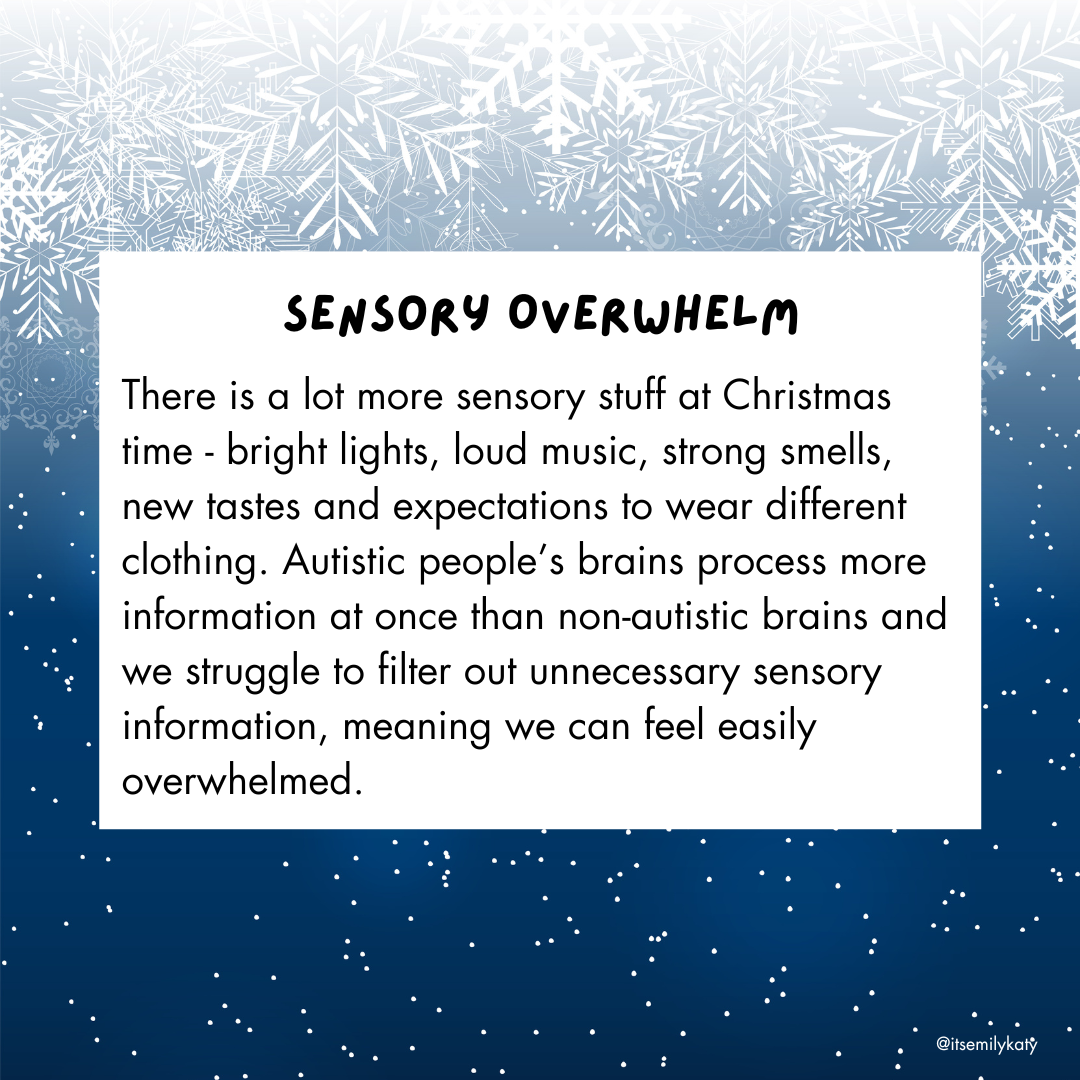
Sensory Overwhelm
There is a lot more sensory stuff at Christmas time - bright lights, loud music, strong smells, new tastes and expectations to wear different clothing. Autistic people’s brains process more information at once than non-autistic brains and we can struggle to filter out unnecessary sensory information, meaning that we can become easily overwhelmed.
Things that might help:
Consider your sensory needs in different environments
Use noise cancelling headphones/earplugs (I love my Loop earplugs)
Utilise fidget toys or calming techniques
Adjust expectations - it’s ok to say no
Stick to your safe foods if needed
Take regular breaks in quiet spaces
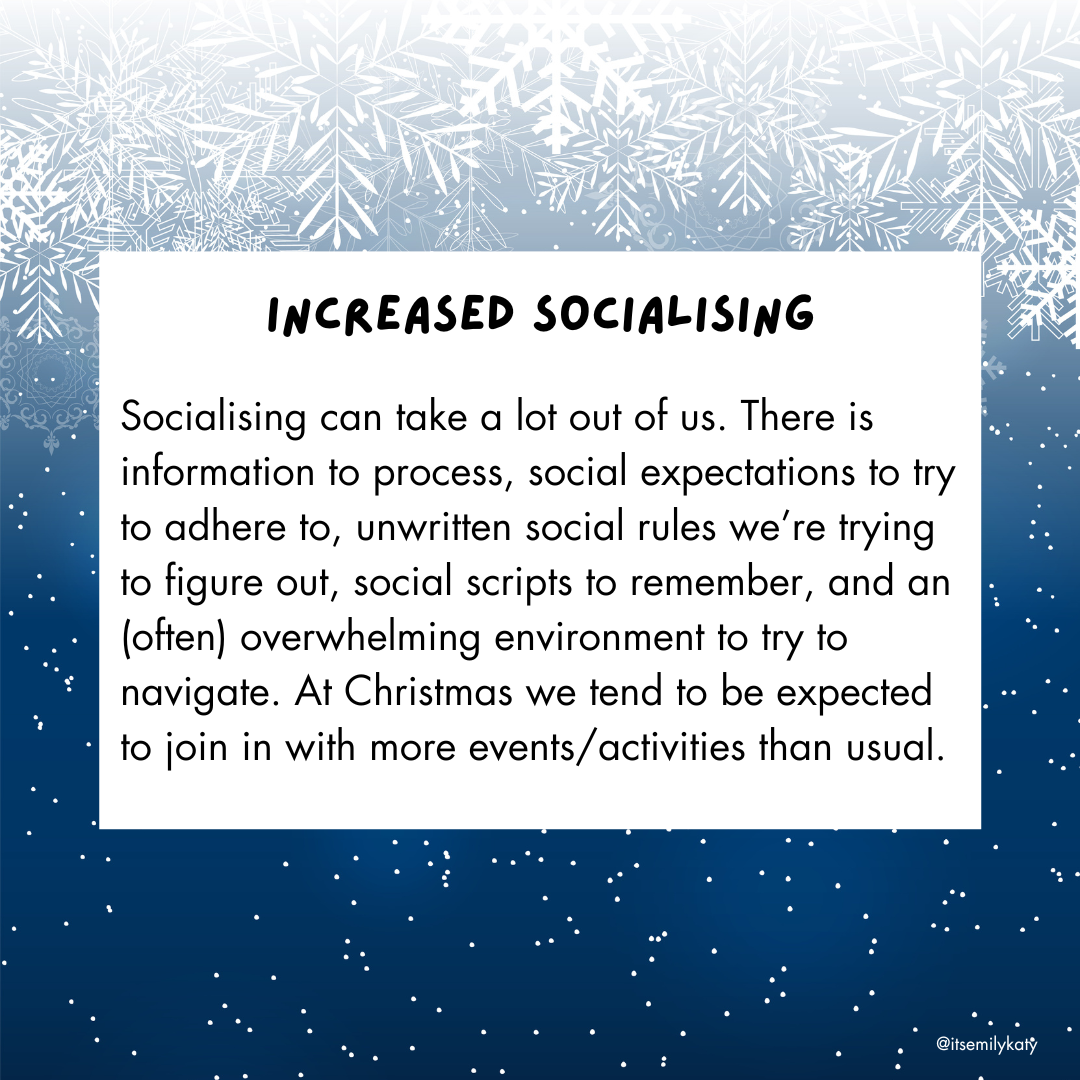
More Socialising/Increased Demands
Socialising is exhausting and can take a lot out of us. There is information to process, social expectations to try to adhere to, unwritten social rules we are trying to figure out, social scripts to remember, and an (often) overwhelming environment to try to navigate. At Christmas time, we tend to be expected to join in with more events or activities than usual.
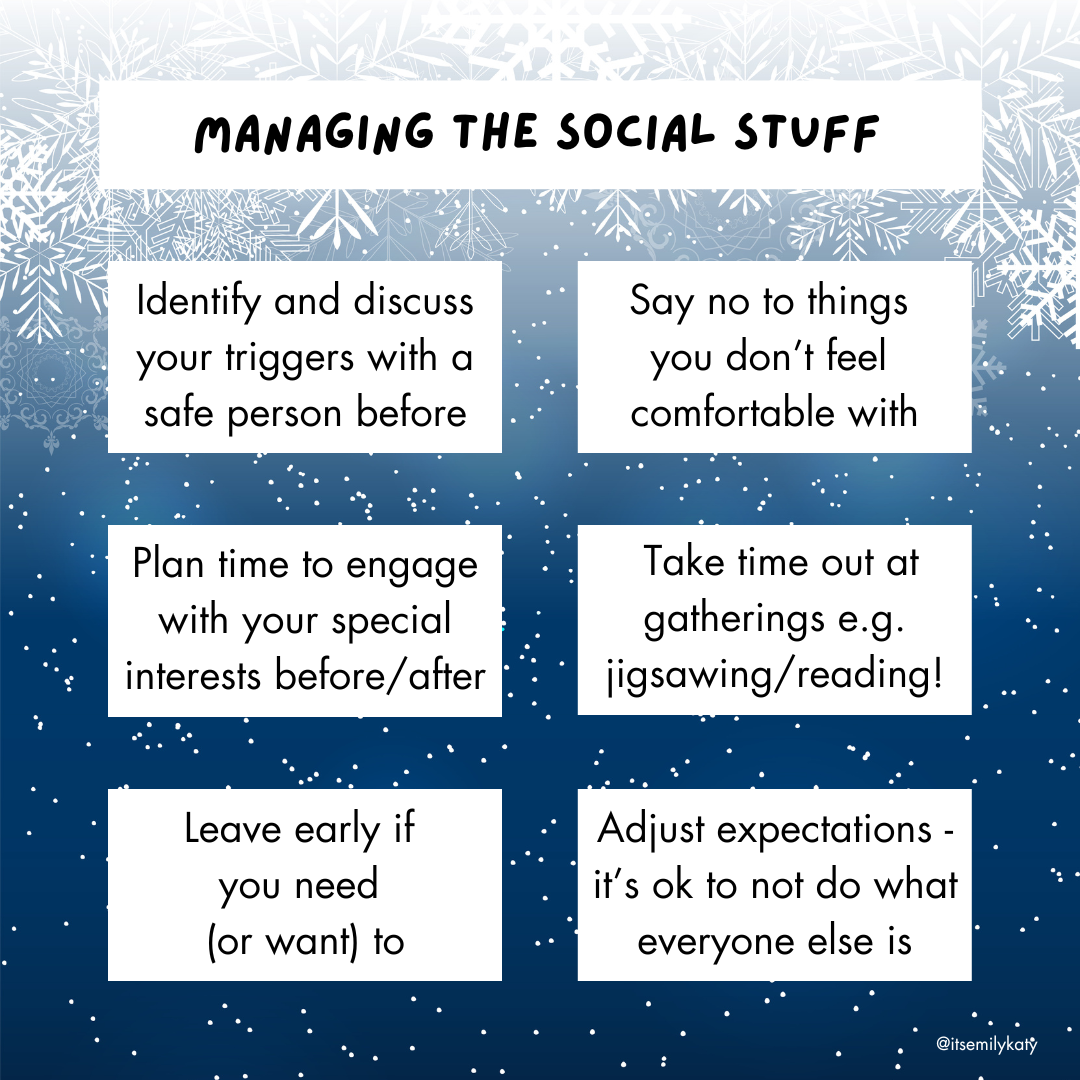
Things that might help:
Identify and discuss your triggers with a safe person beforehand
Say no to things you don’t feel comfortable with
Plan time to engage with your special interests before/after events
Take time out at gatherings e.g. jigsawing or reading
Leave early if you need (or want) to
Adjust expectations - it’s ok to not do what everyone else is
Alternatively, you might feel lonely and not have been invited to anything. I want you to know that you are not alone. 92% of people that Rethink Mental Illness spoke to reported finding Christmas stressful and triggering - they talk about loneliness here. If you feel up to it, have a look at what is going on in your community on local Facebook pages, or join in with discussions online. Here are Mind’s useful contacts if you’re struggling.
Some adjustments can be harder to implement if people around you don’t understand your (or your child’s) needs. Hopefully they will be open to a conversation about what you or your child finds difficult and what you think might help. If not, this is a great article by Chris Bonnello (Autistic Not Weird) on ‘What to do when your family doesn’t accept autism’.

Ultimately though, your needs matter and you deserve to enjoy Christmas your own way, even if that differs from other people’s ideas and expectations.
Remember…
You don’t have to do what everyone else is doing.
You are allowed to say no (and you don’t have to be at breaking point to).
Be kind to yourself.
Routine and normality will return soon.
Helpful Guides:
An Autistic Friendly Christmas by Autistic Girls Network
An autistic person’s guide to an autism-friendly Christmas by Chris Bonnello, Autistic Not Weird
Preparing for the Festive Season by Scottish Autism
Christine McGuiness - Helping your autistic child at Christmas by BBC Bitesize
Christmas and autism: How to make Christmas autism friendly by Caudwell Children
Tips for supporting autistic children at Christmas by Kate Laine-Toner, Bristol Autism Support
(Video) Supporting your autistic needs through the festive season by Purple Ella, Clinical Partners/Divergent Voices

What helps you manage (and hopefully enjoy!) Christmas?

GIRL UNMASKED (The Sunday Times Bestseller) is available to order from Amazon and all major bookstores as a hardback, paperback, audiobook and ebook.
linktr.ee/itsemilykaty
If you would like to support my blog on a one-off or monthly basis, you can here: https://buymeacoffee.com/itsemilykaty