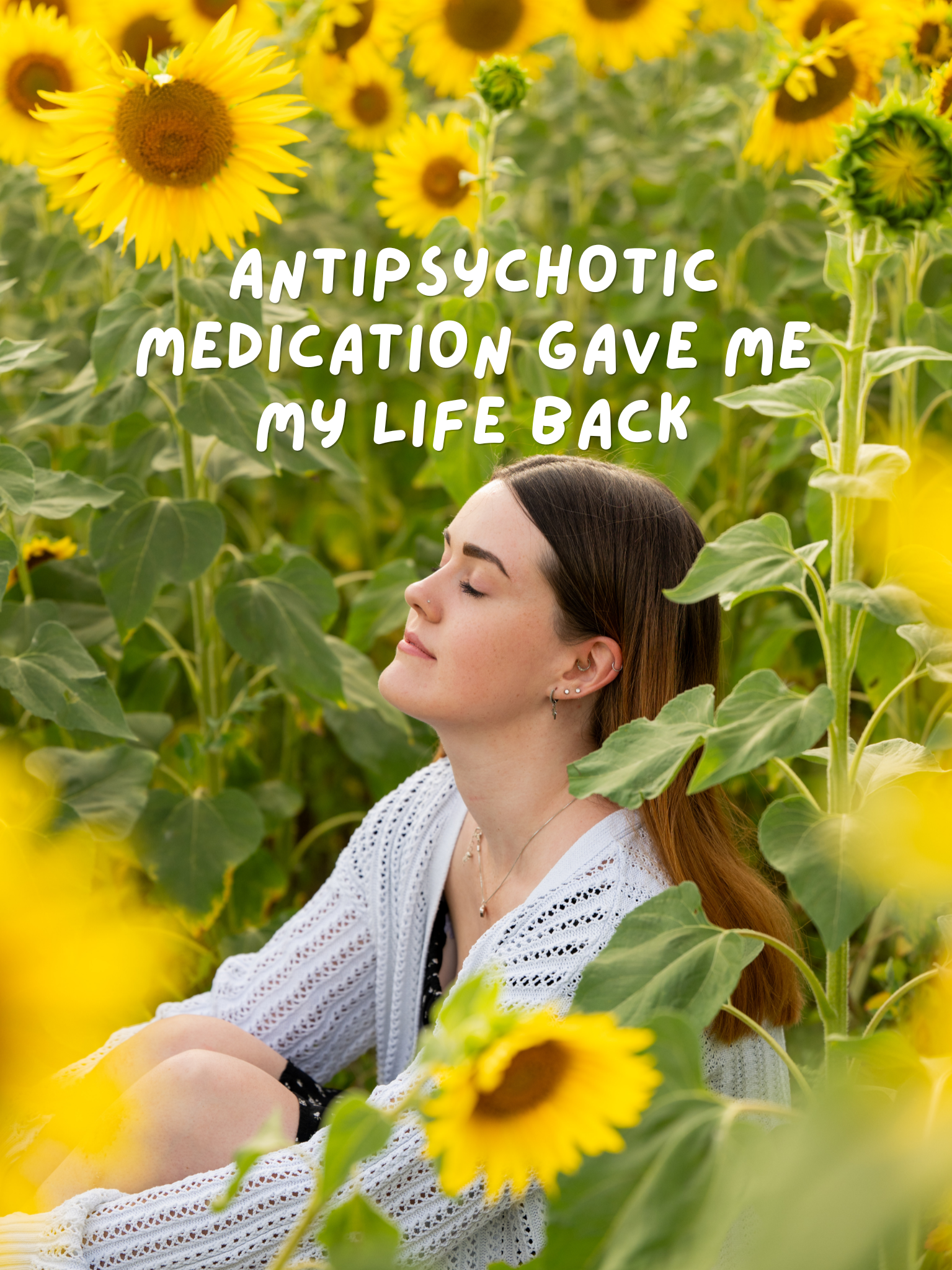
Antipsychotic Medication Gave Me My Life Back
Today is the first of the month which means that it’s #PostYourPill day - a campaign started by Dr Alex George to break down the stigma around taking medication for your mental health.
Today, I wanted to share my experience: antipsychotic medication has given me my life back.
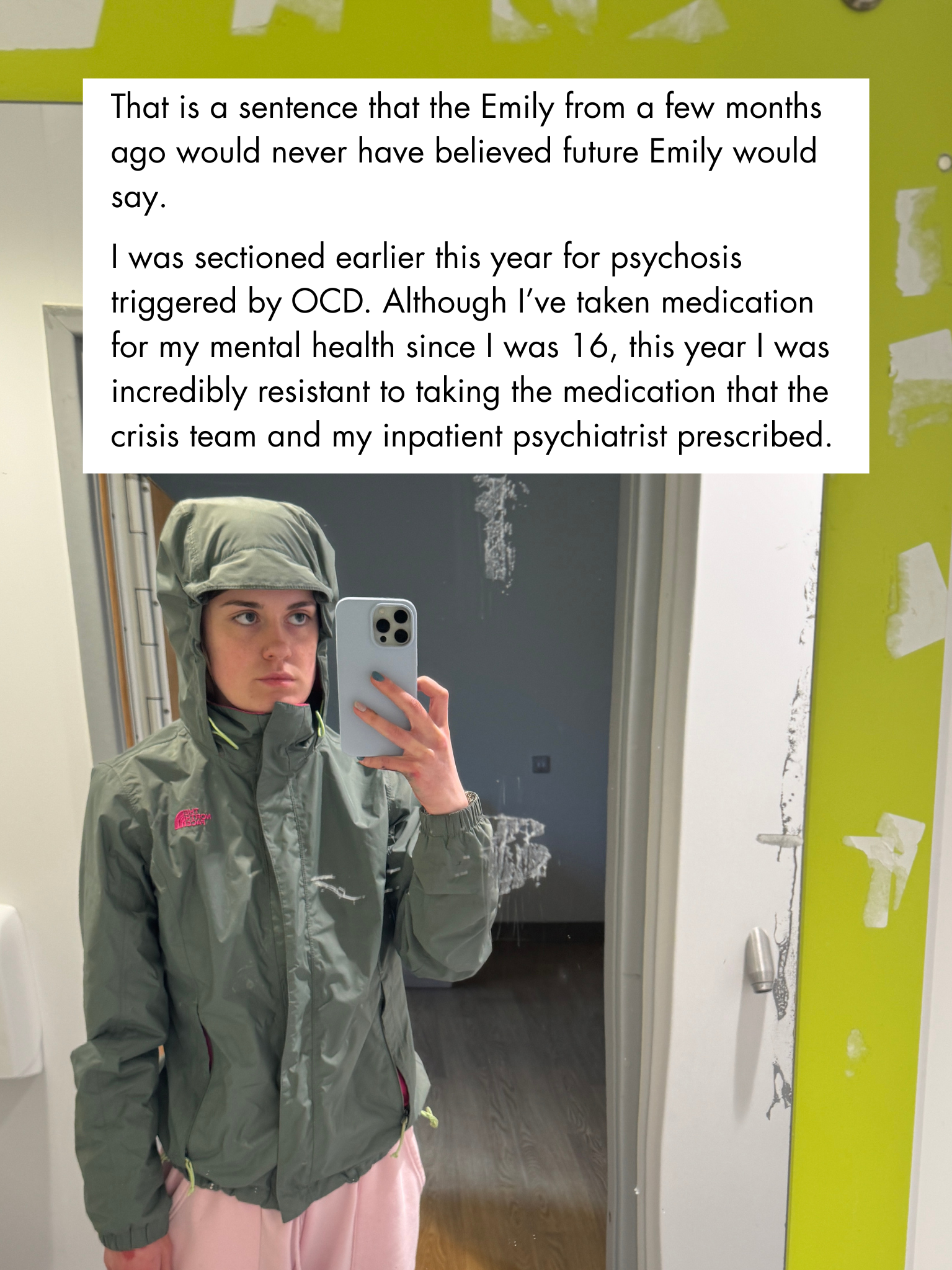
That is a sentence that the Emily from a few months ago would never have believed future Emily would say.
I was sectioned earlier this year for psychosis triggered by OCD. Although I’ve taken medication for my mental health since I was 16, this year I was incredibly resistant to taking the medication that the crisis team and my inpatient psychiatrist prescribed.
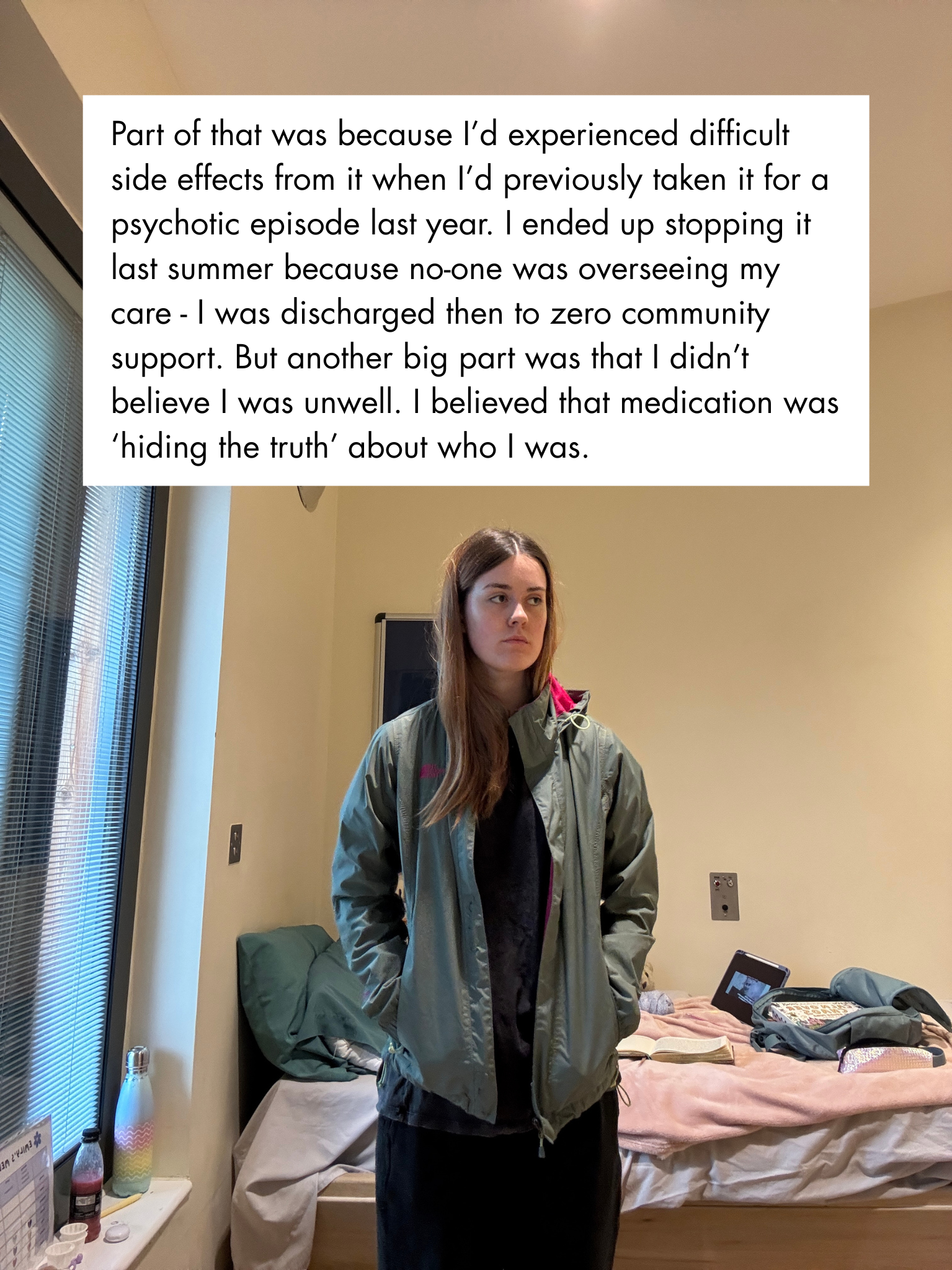
Part of that was because I’d experienced difficult side effects from it when I’d previously taken it for a psychotic episode last year. I ended up stopping it last summer because no-one was overseeing my care - I was discharged then to zero community support. But another big part was that I didn’t believe I was unwell. I believed that medication was ‘hiding the truth’ about who I was. OCD had convinced me I was a dangerous monster and I felt like no-one believed me. Because of that, medication had to be given to me against my will for a while. That was traumatic, and it has left me with complicated feelings about taking it now. I want a sense of personal agency and autonomy, rather than feeling I have been forced to take medication. But I also know that each time I stopped it this year, I became unwell again and was therefore sectioned three times.
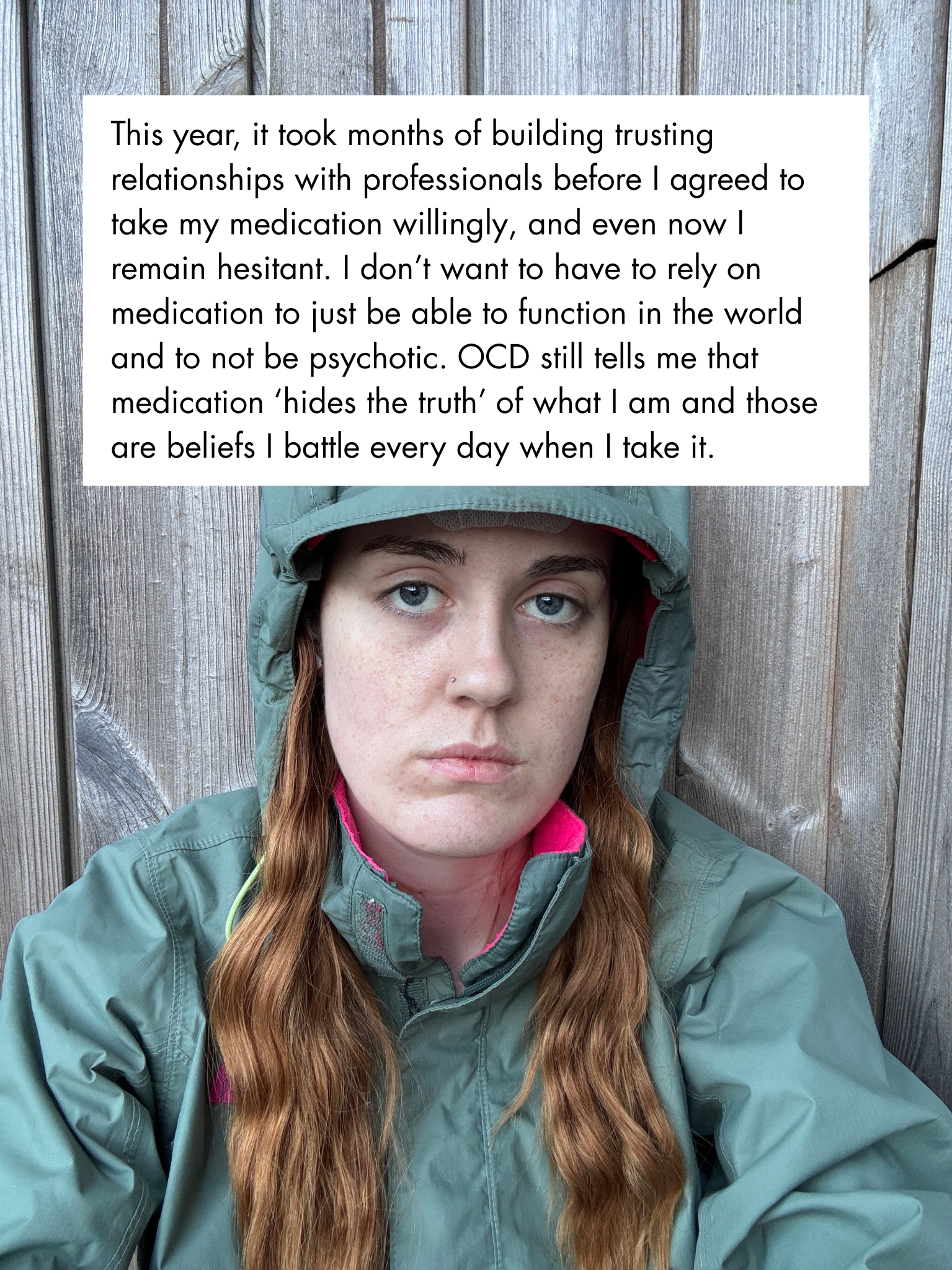
This year, it took months of building trusting relationships with professionals before I agreed to take my medication willingly, and even now I remain hesitant. I don’t want to have to rely on medication to just be able to function in the world and to not be psychotic. OCD still tells me that medication ‘hides the truth’ of what I am and those are beliefs I battle every day when I take it.
But, there is one thing I can say with certainty: taking antipsychotic medication has given me my life back.
Psychosis is a condition where someone loses touch with reality. It includes experiencing delusions (false beliefs) and hallucinations (seeing or hearing things that aren’t real). I believed that the police were coming to arrest me for a crime I hadn’t committed. I thought that burglars were trying to break in at night to harm me and my family. I heard ‘residents’ arguing about the ways they wanted to hurt me.
It was terrifying.
I was living in a constant state of hypervigilance, on high alert, and incredibly afraid.
Alongside that, OCD brought another kind of torment. OCD involves obsessions (unwanted and distressing intrusive thoughts) and compulsions (repeated acts carried out to reduce anxiety caused by the obsession). I experience Harm OCD, a subtype of OCD centred around intrusive thoughts about harming another person or being harmed. These thoughts are ego-dystonic, meaning that their content is the complete opposite of a person’s values, morals and character. That is why they are incredibly distressing.
OCD convinced me that I was dangerous, which made me want to end my life. My attempts at doing so landed me in hospital, where I was placed on one-to-one observations – supervised twenty-four hours a day for my own safety.
It was antipsychotic medication that stopped the voices.
It was antipsychotic medication that took away the feeling that the police were after me.
It was antipsychotic medication that quietened the paranoia that everyone was talking about me.
It was antipsychotic medication that lifted the constant feeling of terror.
And it was antipsychotic medication that stopped me believing that the only way out was to end my life.
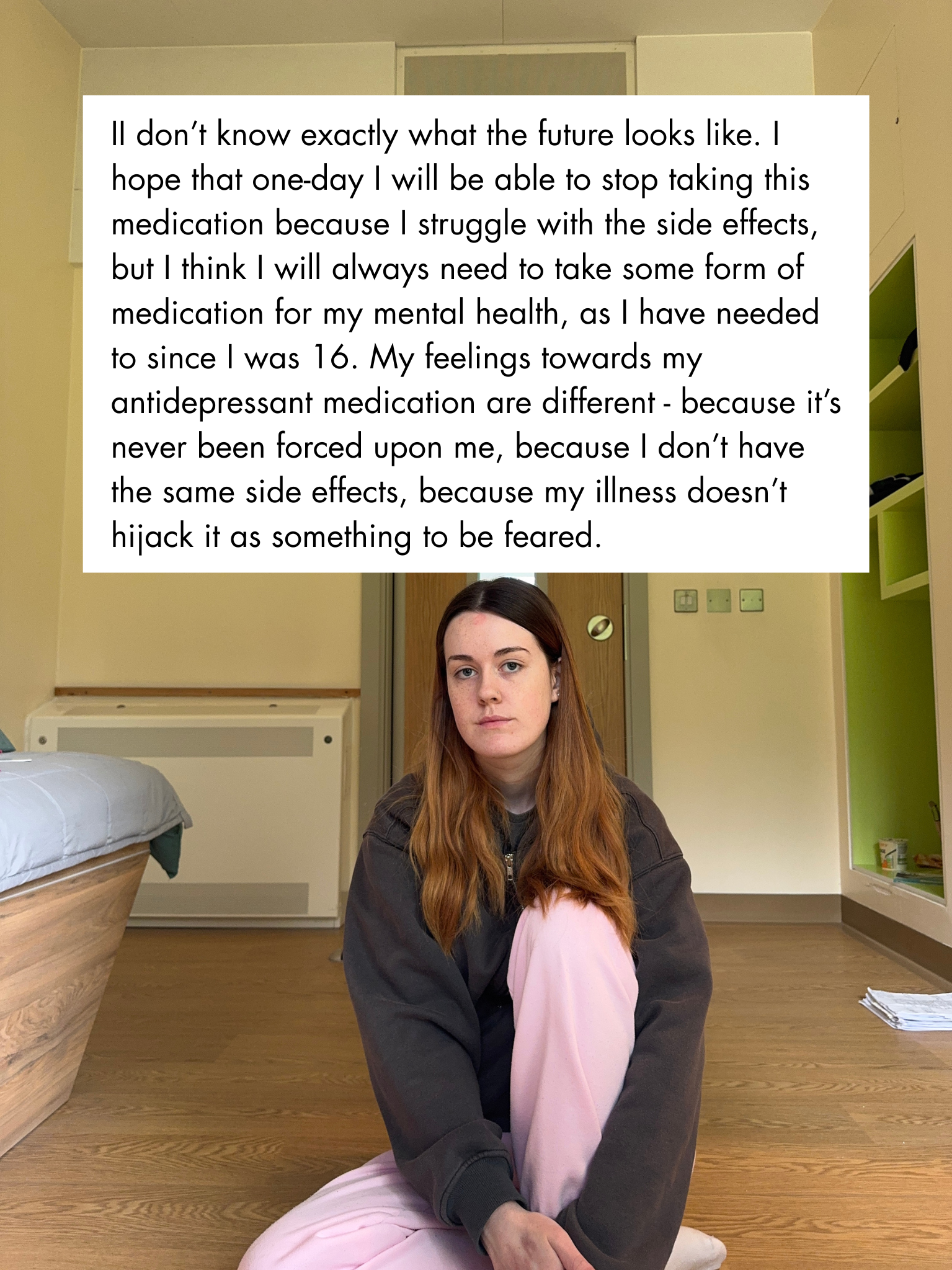
I don’t know exactly what the future looks like. I hope that one-day I will be able to stop taking this medication because I struggle with the side effects, but I think I will always need to take some form of medication for my mental health, as I have needed to since I was 16. My feelings towards my antidepressant medication are different - because it’s never been forced upon me, because I don’t have the same side effects, because my illness doesn’t hijack it as something to be feared.
Thanks to antipsychotic medication, I am no longer in hospital.
This morning I woke up in my own bed. I went to therapy. I spent time writing in the library. I sat in a park and had an ice-cream. Later, I am having a barbecue with my family and family friends.
My days are no longer dictated by the voices, by being sectioned, by locked wards, by having my freedom taken away, by ward rounds, or by waiting to be injected with medication I was terrified of. They’re my days again, to do what I want to do and to spend time with the people that I love.
I can admit that antipsychotic medication gave me my life back. And I am so incredibly grateful for that. I am grateful to be alive to experience whatever the future holds. I am grateful to be back in the ‘real world’ again.
So here’s your reminder: if you take medication for your mental health, that’s okay. It’s not a personal failure. It’s not something to be ashamed of. And it’s not something you have to prove you can live without. If you need it, you need it. And that’s okay.
Love, Emily x

GIRL UNMASKED (The Sunday Times Bestseller) is available to order from Amazon and all major bookstores as a hardback, paperback, audiobook and ebook. linktr.ee/itsemilykaty
If you would like to support my blog on a one-off or monthly basis, you can here: https://buymeacoffee.com/itsemilykaty